
What Are HVDC Transformers? A Complete Guide to High-Voltage DC Power Solutions
2026-01-07
As global energy demand increases, long-distance and high-capacity power transmission has become a central requirement for modern power grids. High-Voltage Direct Current (HVDC) systems are now widely adopted for intercontinental links, offshore wind integration, and cross-border energy exchange. At the core of every HVDC project lies one critical component—the HVDC Transformer, also known as the HVDC converter transformer.
These transformers are engineered to withstand extreme voltages, complex harmonic environments, and demanding thermal cycles, enabling efficient power conversion between AC and DC networks. Whether in a ±500 kV regional link or a massive 1100 kV HVDC transformer system such as those deployed in China, HVDC transformers play an indispensable role in maintaining stability and reliability in modern power systems.
1. What Is an HVDC Transformer?
An HVDC Transformer is a specialized power transformer used in converter stations to step up AC voltage before it is converted into DC—or vice versa. Unlike traditional AC transformers, HVDC transformers must endure:
-
Steep voltage fluctuations
-
DC superimposed stress
-
High harmonic currents
-
Bipolar and monopolar operational modes
-
Heavy load cycles over long transmission distances
Because of these demanding requirements, HVDC transformers require advanced insulation systems, high mechanical strength, and superior thermal performance compared with standard transmission transformers.
2. How HVDC Transformers Work
HVDC transformers operate in coordination with power electronic converters, primarily based on LCC (Line Commutated Converter) or VSC (Voltage Source Converter) technologies.
Conversion Process:
-
AC Input enters the transformer from the local grid.
-
The transformer adjusts voltage levels according to system requirements.
-
The output connects to converter valves (thyristor-based or IGBT-based).
-
The converter transforms AC into DC or DC into AC.
By controlling voltage, harmonics, and insulation strength, the HVDC transformer ensures stable conversion and efficient power flow—even over thousands of kilometers.
3. Key Technical Features of HVDC Transformers
1) Ultra-High Voltage Capability
Systems like the 1100 kV HVDC transformer can handle record-breaking voltages, supporting long-distance, high-capacity bulk transmission.
2) Advanced Insulation Structure
To withstand DC superimposed voltage stress and dynamic load cycles.
3) Special Winding Designs
-
Multiple valve windings
-
Interleaved structures for harmonic suppression
-
Reinforced conductor insulation
4) High Short-Circuit Strength
Because HVDC faults can produce massive current surges.
5) Robust Cooling Systems
Often using OFAF or ODAF cooling strategies to stabilize performance under extreme thermal stress.
4. Real-World Applications
HVDC transformers are widely used in:
-
Long-distance power transmission (over 800–3000 km)
-
Cross-border interconnection between national grids
-
Offshore wind farm integration
-
Urban power reinforcement
-
Energy transmission from remote hydro/solar bases
They enable high efficiency, low transmission loss, and stable grid performance across regions.
5. Leading HVDC Transformer Manufacturers
Several global companies dominate the HVDC transformer market due to advanced technology and manufacturing expertise:
1) Siemens HVDC Transformer
Known for large-scale UHVDC projects in Europe, China, and India. Siemens specializes in robust insulation and hybrid cooling systems.
2) ABB HVDC Transformer
One of the earliest pioneers. ABB provides transformers for hundreds of converter stations worldwide, including LCC and VSC systems.
3) China-based Manufacturers
Companies like TBEA, XD Electric, and others supply 1100 kV HVDC transformers and provide solutions for large-scale national UHVDC grids.
4) International Transformer Manufacturers
Many global transformer manufacturers now customize HVDC units for renewable energy and smart grid applications.
6. Why HVDC Transformers Matter for Modern Energy Systems
HVDC transformers are essential because they deliver:
-
Lower transmission losses (especially beyond 800 km)
-
Higher power transfer capability
-
Greater grid stability
-
Integration of remote renewable resources
-
Cross-border power trading
-
Reduced right-of-way requirements
As the world moves toward clean energy and energy interconnection, HVDC transformers will continue to be the backbone of global power transmission infrastructure.
7. Sample Engineering Table for Article
| Specification Category | Typical HVDC Transformer Requirements | Notes |
| Voltage Level | ±320 kV to ±1100 kV | Ultra-high voltage for long-distance links |
| Power Capacity | 200 – 800 MVA | Each converter station uses multiple units |
| Cooling Type | OFAF / ODAF / ONAN | Depends on system load and ambient temperature |
| Winding Structure | Multi-valve winding | Designed to handle harmonics and DC bias |
| Insulation System | High-strength oil/paper | Built for DC superimposed stress |
| Applications | Long-distance HVDC, offshore wind, and UHVDC projects | Supports renewable & grid interconnection |
HVDC transformers represent one of the most advanced forms of transformer engineering. As global transmission networks continue to expand—connecting countries, renewable bases, and offshore facilities—the demand for reliable, high-performance HVDC converter transformers will continue to rise. With continuous innovation from leading companies such as Siemens and ABB, along with major transformer manufacturers across Asia and Europe, HVDC technology will remain the foundation of future energy systems.

Related Articles

Related Products
4/0 Appaloosa Aluminum Conductor Quadruplex Overhead Service Drop Cable
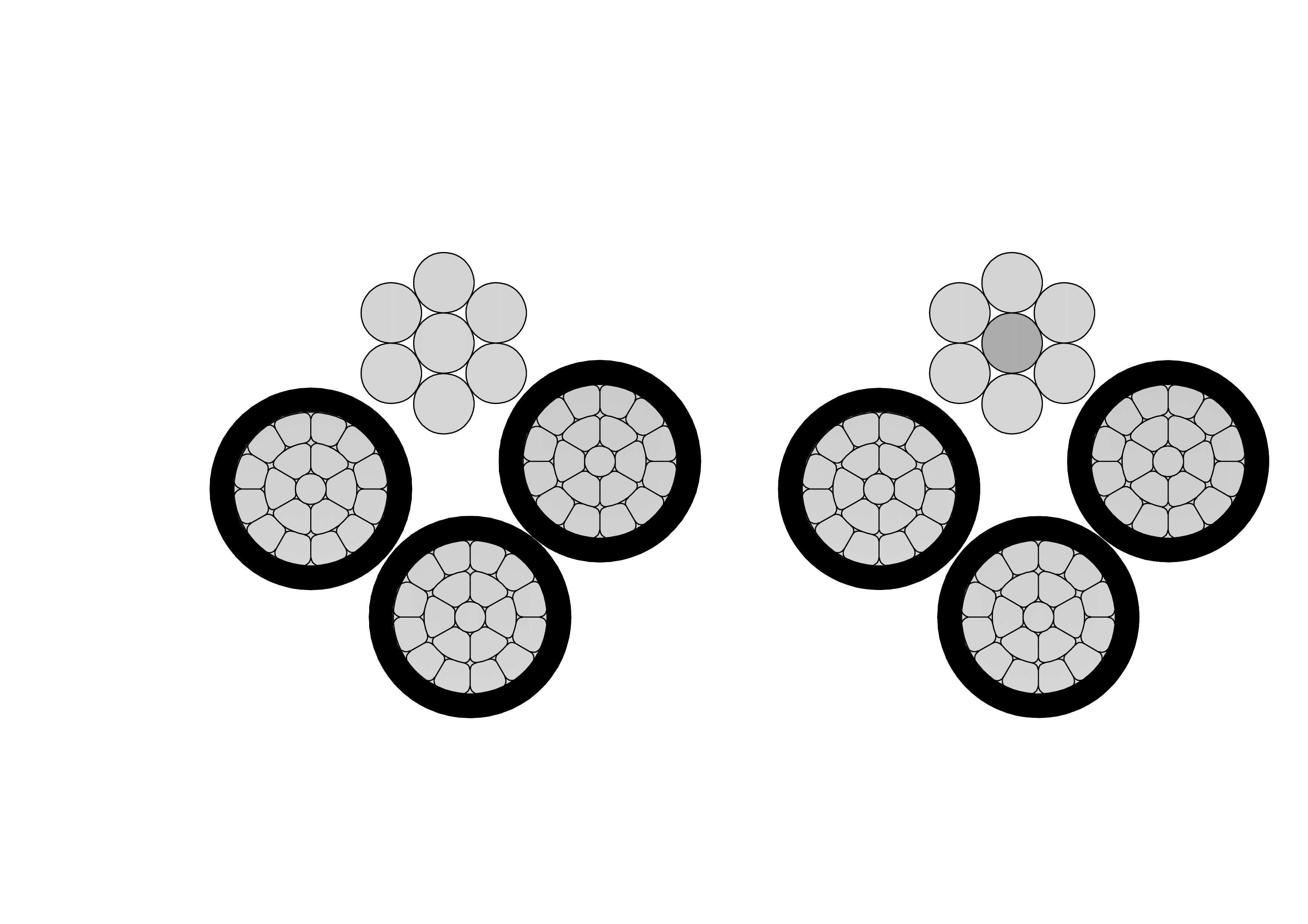
Our 4/0 Appaloosa Quadruplex Service Drop Cable delivers efficient overhead three-phase service with neutral support. Comprising three 4/0 AWG aluminum phase conductors (7-strand) insulated with XLPE or PE and helically twisted around a strong neutral messenger (ACSR or aluminum), it meets ASTM, ICEA, and international standards. The messenger provides full self-support, allowing longer spans and reduced infrastructure costs. Premium insulation resists sunlight, moisture, and mechanical abrasion for decades of outdoor service. Lightweight and flexible, it simplifies installation with low sag. The 4/0 Appaloosa Quadruplex Service Drop Cable ensures minimal losses, high mechanical endurance, and excellent weather performance up to 600V. Flame-retardant options enhance safety. Perfect for reliable power delivery in urban developments, commercial areas, street lighting, and temporary sites requiring safe, cost-effective aerial bundled quadruplex solutions.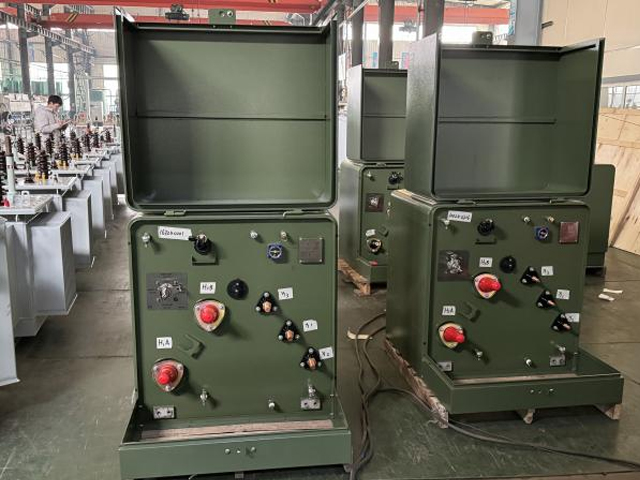
33kV Single Phase Pole Mounted Transformer
Designed for medium-voltage overhead systems, the 33kV single phase pole mounted transformer efficiently steps down primary voltages of 33kV (or 34.5kV variants) to secondary levels such as 230V, 240V, or 415V, serving substantial single-phase loads in extended networks. Constructed with advanced grain-oriented silicon steel cores and precision windings, it achieves minimal no-load and load losses while fully complying with IEC 60076 and IEEE C57 requirements. The oil-immersed tank with ONAN cooling maintains a 65°C temperature rise, supporting reliable performance during peak demands and harsh weather exposure. High insulation levels, including 150-200kV BIL on the HV side, combined with pressure relief valves, HV bushings with arcing horns, and optional surge arresters, provide exceptional protection against lightning and overvoltages. This transformer offers quiet operation, strong overload capacity, and extended service life, making it essential for utilities optimizing power access in remote or growing areas.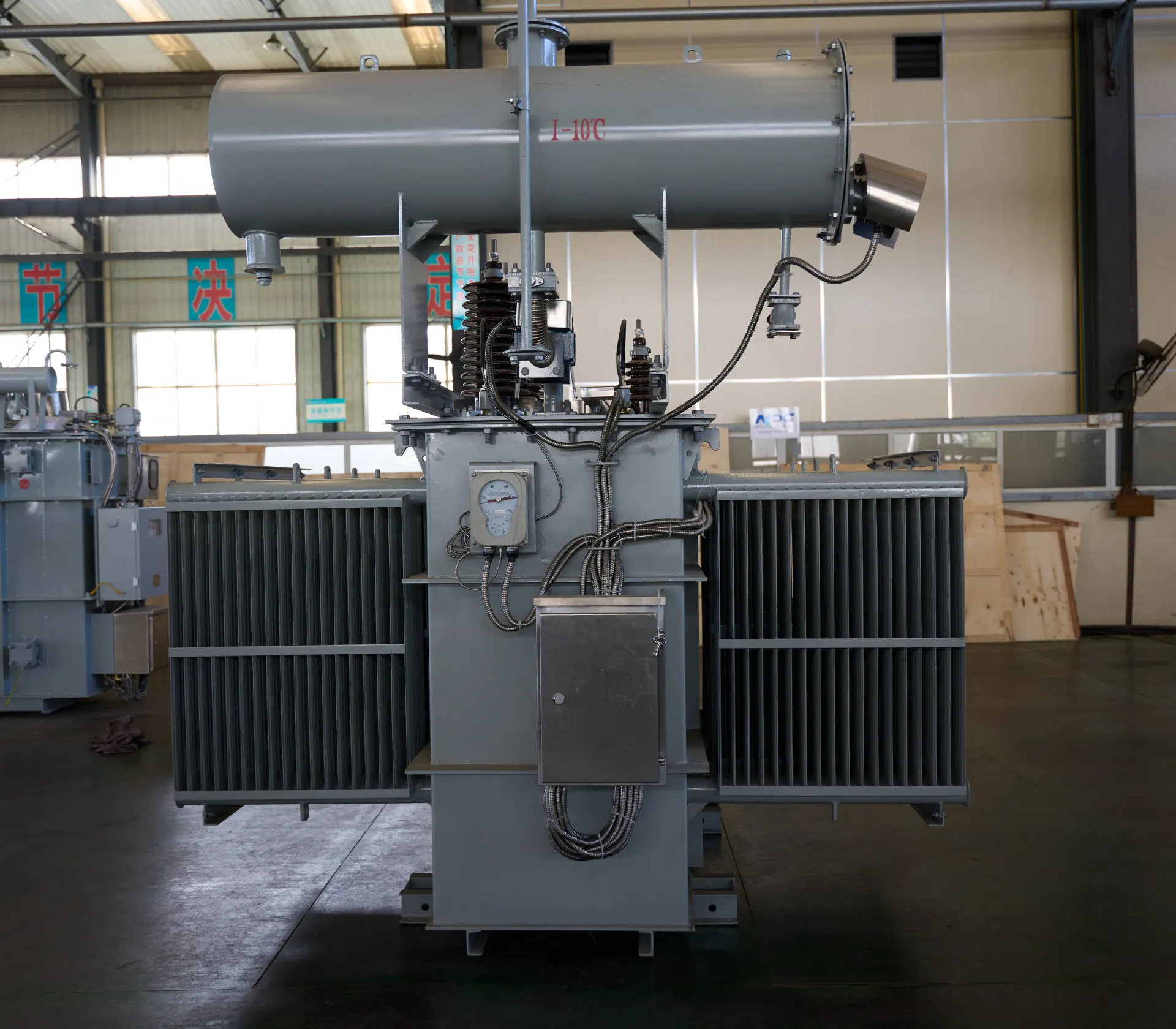
37kV 10000kVA(10MVA) Three Phase Duplex Winding Oil Immersed Power Transformer
The 37kV 10000kVA (10MVA) Three Phase Duplex Winding Oil Immersed Power Transformer is designed for high-reliability medium-voltage distribution and industrial applications. Featuring 99.95% electrolytic copper duplex windings, advanced ONAN/ONAF cooling, and ±8×1.25% on-load tap changer (optional), it delivers ultra-low no-load and load losses (S11/S13 series). Fully compliant with IEC 60076, GB/T 1094, and ANSI/IEEE standards, it withstands 170–200 kV lightning impulse and PD <10 pC. Corrugated tank or detachable radiator design ensures excellent heat dissipation and mechanical strength. Standard voltages 37±8×1.25%/11kV, 37/6.3kV or custom. Vacuum oil processing and nitrogen sealing guarantee 30+ years service life with minimal maintenance. Trusted by utilities, EPCs, and heavy industries worldwide.2Y-high-voltage-power-cable-2.webp)
High Voltage / 2XS(F)2Y, A2XS(F)2Y 110kV Power Cable
The 2XS(F)2Y / A2XS(F)2Y 110kV High Voltage Power Cable is engineered for underground high-voltage transmission networks with a maximum operating voltage of 110kV (123kV highest). Built with Class 2 copper or aluminum Milliken conductors, extruded semi-conductive XLPE screens, and XLPE insulation, it ensures excellent electrical performance and long service life. Its copper wire screen with counter-helical copper tape offers enhanced shielding, while the water-swellable tapes provide longitudinal water-blocking. The HDPE outer sheath delivers high abrasion resistance and durability, making it ideal for installation in environments with existing mechanical protection. Manufactured to IEC 60840, HRN HD 632, and IEC/EN 60228 standards, this cable is well-suited for high-load and long-distance transmission applications.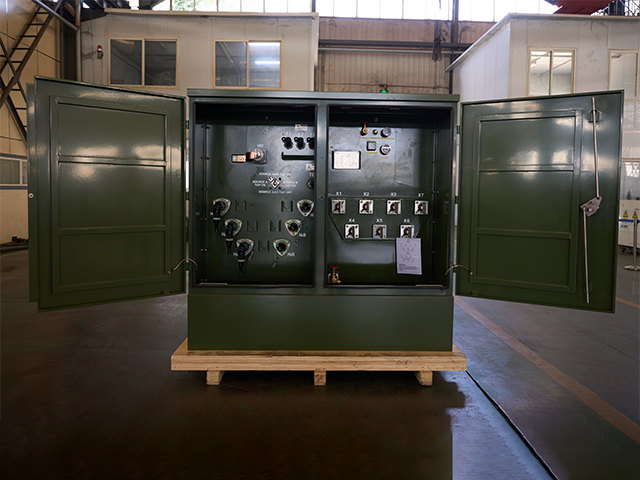
167kVA Three Phase Pad Mounted Transformer
The 167kVA three phase pad mounted transformer delivers robust and efficient power distribution for medium-voltage applications. Built to exceed ANSI C57.12.34, IEEE, and DOE efficiency standards, this compartmental-type unit features a durable, tamper-resistant steel enclosure with dead-front or live-front high-voltage bushings, radial or loop feed configurations, and a 65°C average winding rise for optimal thermal performance. Primary voltages range from 4160V to 34500V (with common options like 12470GrdY/7200 or 13800V), while secondary voltages include 208Y/120V, 480Y/277V, or custom low-voltage setups.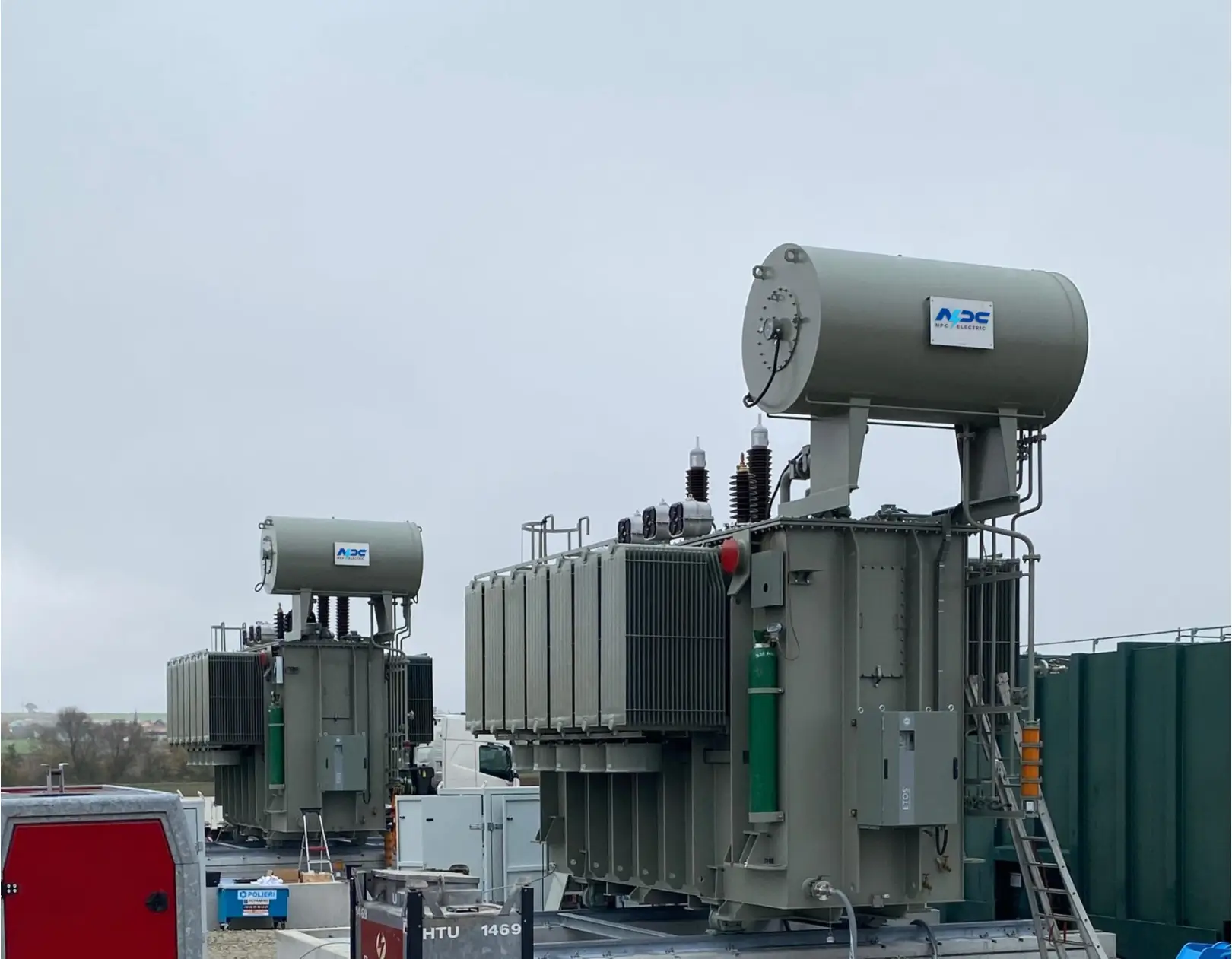
130kV High-Voltage Power Transformer
The 130kV Power Transformer is designed for advanced high-voltage transmission and distribution systems requiring superior electrical stability and long-term operational reliability. Built with an optimized magnetic circuit and precision-engineered windings, it delivers excellent voltage regulation, minimized energy losses, and strong resistance to thermal and mechanical stress. The transformer features a reinforced insulation structure and a sealed oil-immersed cooling system that ensures consistent performance under fluctuating load and environmental conditions. Its rugged construction supports outdoor installation and continuous operation in demanding climates. Designed to meet international grid requirements, this transformer is suitable for utility networks, industrial power hubs, and infrastructure projects where safety, efficiency, and service continuity are critical.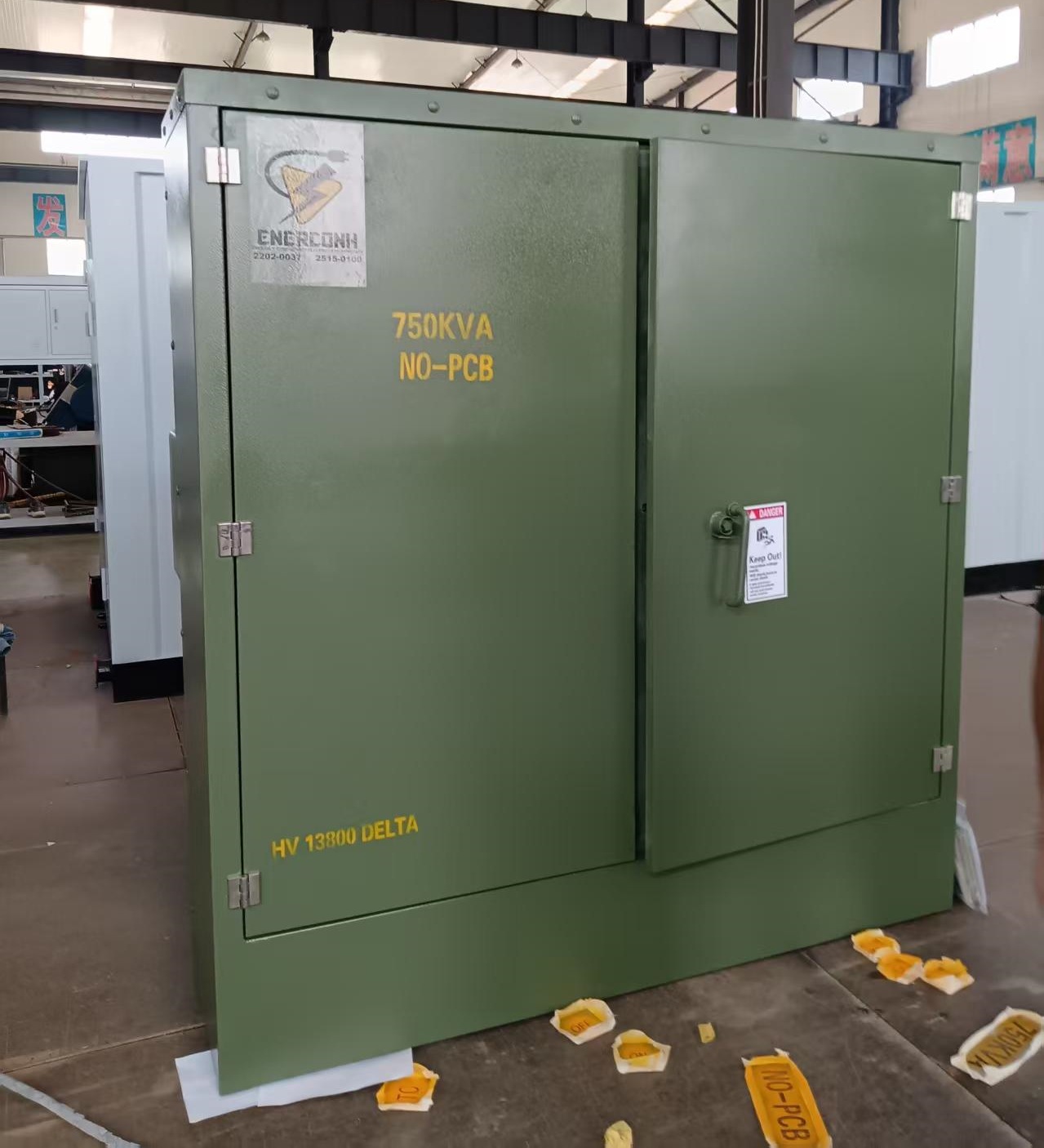
750kVA Radial Feed Pad Mounted transformer To Honduras
The 750kVA Radial Feed Pad Mounted Transformer is a high-capacity, three-phase, oil-immersed distribution transformer specifically configured for radial feed (single-source primary supply) applications. It is ideal for utility substations, commercial complexes, industrial sites, and large residential developments requiring dependable step-down from medium-voltage primary lines to low-voltage secondary service. Fully compliant with ANSI C57.12.00, IEEE C57.12.90, IEEE C57.12.34 (for pad-mounted compartmental-type transformers), IEC 60076, and DOE 2016 efficiency standards (aligned with 2029 amendments for reduced losses), this 750 kVA unit provides excellent energy efficiency (>99.2% typical), low no-load/load losses, robust overload capability, and long-term reliability in outdoor environments. Typical specifications include mineral oil or FR3 natural ester fluid (ONAN cooling), aluminum or copper windings, primary voltage 13.8kV (13800V Delta or 12470GrdY/7200 common for Latin America/Honduras compatibility), secondary 480Y/277V (or 208Y/120V, custom options), BIL 95kV HV / 30kV LV, impedance 5.75–7.0% (±7.5%), ±2×2.5% taps, radial-feed dead-front design with three high-voltage bushings (H1, H2, H3), bayonet fuses + partial-range current-limiting fuses, load-break switch (optional), lightning arresters, pressure relief valve, oil level/temperature gauges, and ANSI 70 gray (or Munsell green) finish. Low sound level (<60 dB), strong short-circuit withstand, and radial-feed configuration suit single-source underground or overhead feeds.
25kVA Conventional Type Single Phase Pole Mounted Transformer
NPC ELECTRIC'S 25kVA Conventional Type Single Phase pole Mounted transformer are designed for servicing residential overhead distribution loads. They are also suitable for light commercial loads, industrial lighting and diversified power applications. These transformers are designed for the application conditions normally encountered on electric utility power distribution systems. Types CSP, CP, SP and S are all available. ISO 9001: 2008 Certified. Typical specifications include mineral oil insulation (ONAN cooling), aluminum or copper windings, primary voltages 2.4 kV–34.5 kV grounded wye or delta (most common: 7200/12470GrdY, 7620/13200GrdY, 12470GrdY/7200, 24940GrdY/14400, 34500GrdY/19920), secondary 120/240 V or 240/120 V split-phase, BIL ratings 95–150 kV HV / 30 kV LV, impedance typically 2.0–4.0%, ±2×2.5% or 5-position tap changer, conventional or completely self-protected (CSP) versions with internal primary fuses, external weak-link cutout, lightning arresters, pressure relief device, oil sight gauge, and standard ANSI 70 gray tank finish. Efficiency usually reaches 98.90%–99.10%+, with low sound level and corrosion-resistant design for long outdoor service life.
2 Palomino Aluminum Conductor Quadruplex Overhead Service Drop Cable
2 Palomino Aluminum Conductor Quadruplex Overhead Service Drop Cable is designed for delivering 3-phase power from pole-mounted transformers directly to the user's service entrance. Built with three 2 AWG aluminum phase conductors and one neutral messenger (7-strand) insulated with polyethylene or XLPE and formed into a quadruplex assembly, it meets ASTM and ICEA requirements for 600V service. The tough insulation offers outstanding protection against UV rays, moisture, tree contact, and abrasion. Self-supporting messenger design ensures easy pulling and reduced sag during installation. The 2 Palomino Quadruplex Service Drop Cable supports efficient power transfer with low voltage drop and high durability in extreme temperatures. Popular for its lightweight construction and reduced installation time, it is the choice for electricians and utilities. Widely deployed in housing developments, commercial services, and temporary power setups, this cable ensures safe, long-lasting overhead connections from distribution transformers to customer service entrances worldwide.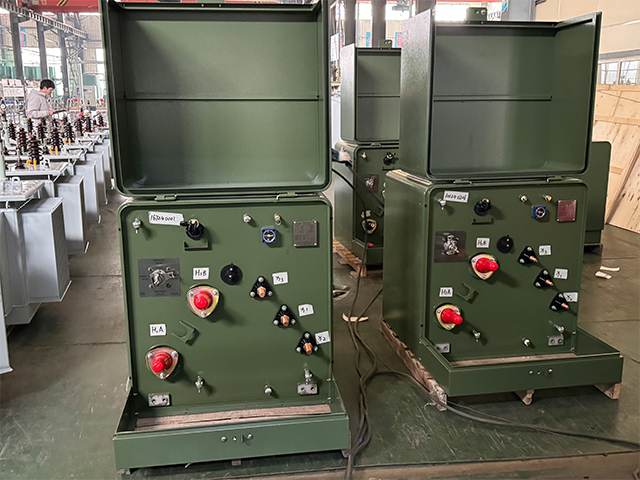
100kVA Single Phase Pad Mounted Transformer
The 100 kVA Single Phase Pad Mounted transformer adheres to a compartmental-type structure in line with IEEE Std C57.12.28 or IEEE Std C57.12.29 standards. It consists of a tank housing high-voltage and low-voltage cable terminating compartments, thoughtfully positioned side by side along one face of the transformer tank. In this configuration, the high-voltage compartment, fitted with two internally connected high-voltage bushing wells and inserts, a 4-position loadbreak switch, a 5-position tap changer switch, and a bayonet fuse, is situated alongside the low-voltage compartment featuring three stud L.V bushings and an oil level gauge.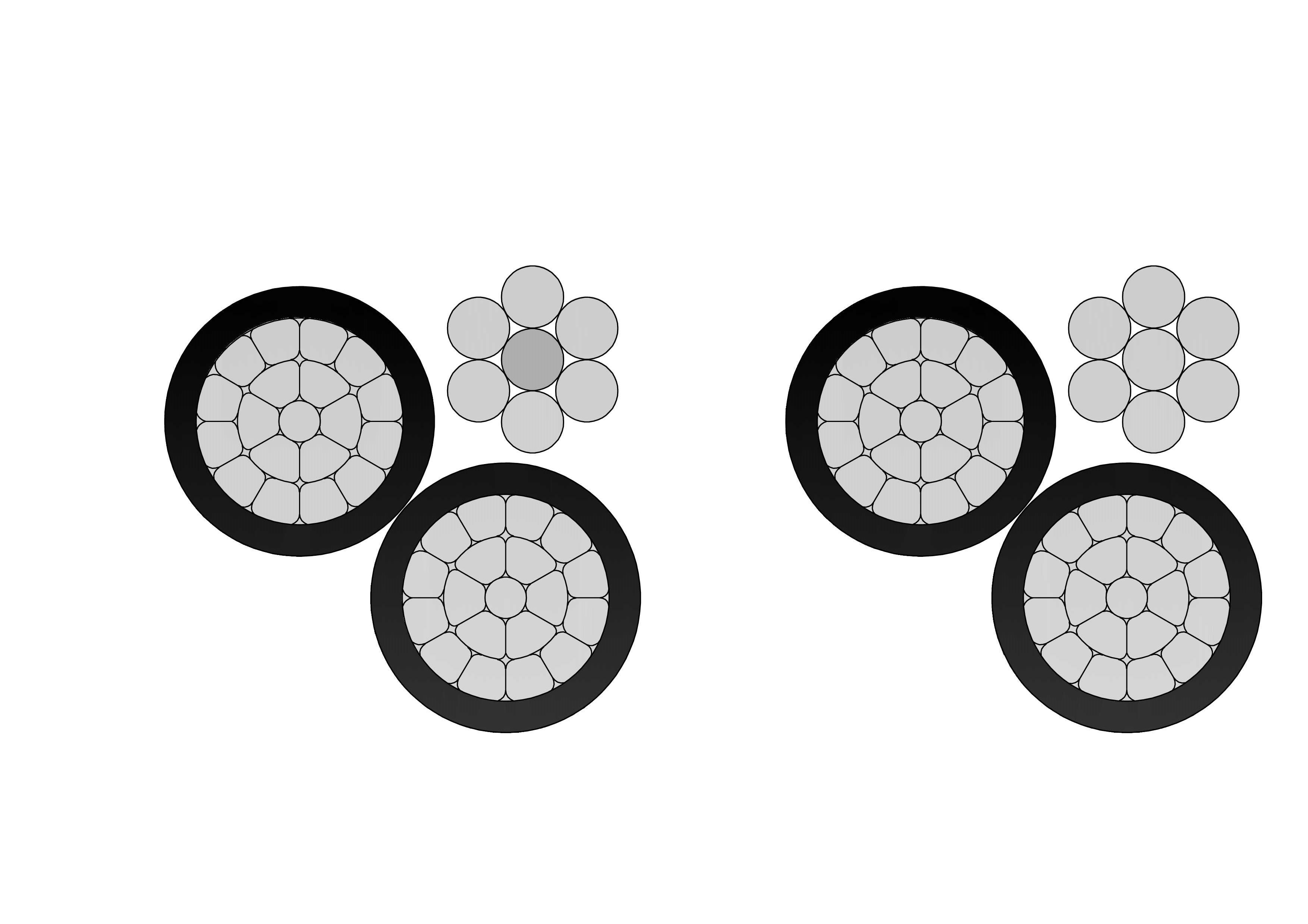
2/0 Dungeness Aluminum Conductor Triplex Overhead Service Drop Cable
The 2/0 Dungeness Aluminum Conductor Triplex Overhead Service Drop Cable is engineered to provide safe and efficient overhead power distribution. Featuring two insulated aluminum conductors and a bare aluminum neutral messenger, this cable delivers strong mechanical support and stable electrical transmission. The 2/0 Dungeness Aluminum Conductor Triplex Overhead Service Drop Cable is manufactured using premium aluminum materials and weather-resistant insulation to ensure long service life in outdoor environments. Its optimized design allows for easy installation while maintaining compliance with utility and industry standards. The cable performs reliably under mechanical stress, temperature changes, and prolonged UV exposure. Strict quality control and systematic testing procedures are applied throughout production to ensure consistent performance and dependable field operation.
100kVA–20MVA Solar Step-Up Transformer for PV Power Plants
The 100kVA–20MVA Solar Step-Up Transformer is engineered specifically for modern solar power plants, providing efficient voltage elevation from inverter output levels to medium- or high-voltage grid requirements. Designed for continuous operation under fluctuating solar loads, this transformer ensures stable power transmission, low energy losses, and high operational reliability. Featuring a robust oil-immersed insulation system, the transformer delivers excellent thermal performance and long service life even in harsh outdoor environments. High-quality copper or aluminum windings, optimized magnetic core design, and advanced cooling configurations contribute to superior efficiency and reduced lifecycle costs. The transformer complies with IEC and IEEE standards, making it suitable for utility-scale photovoltaic projects, distributed generation systems, and renewable energy substations. With flexible capacity coverage from 100kVA to 20MVA, it adapts seamlessly to small, medium, and large solar installations.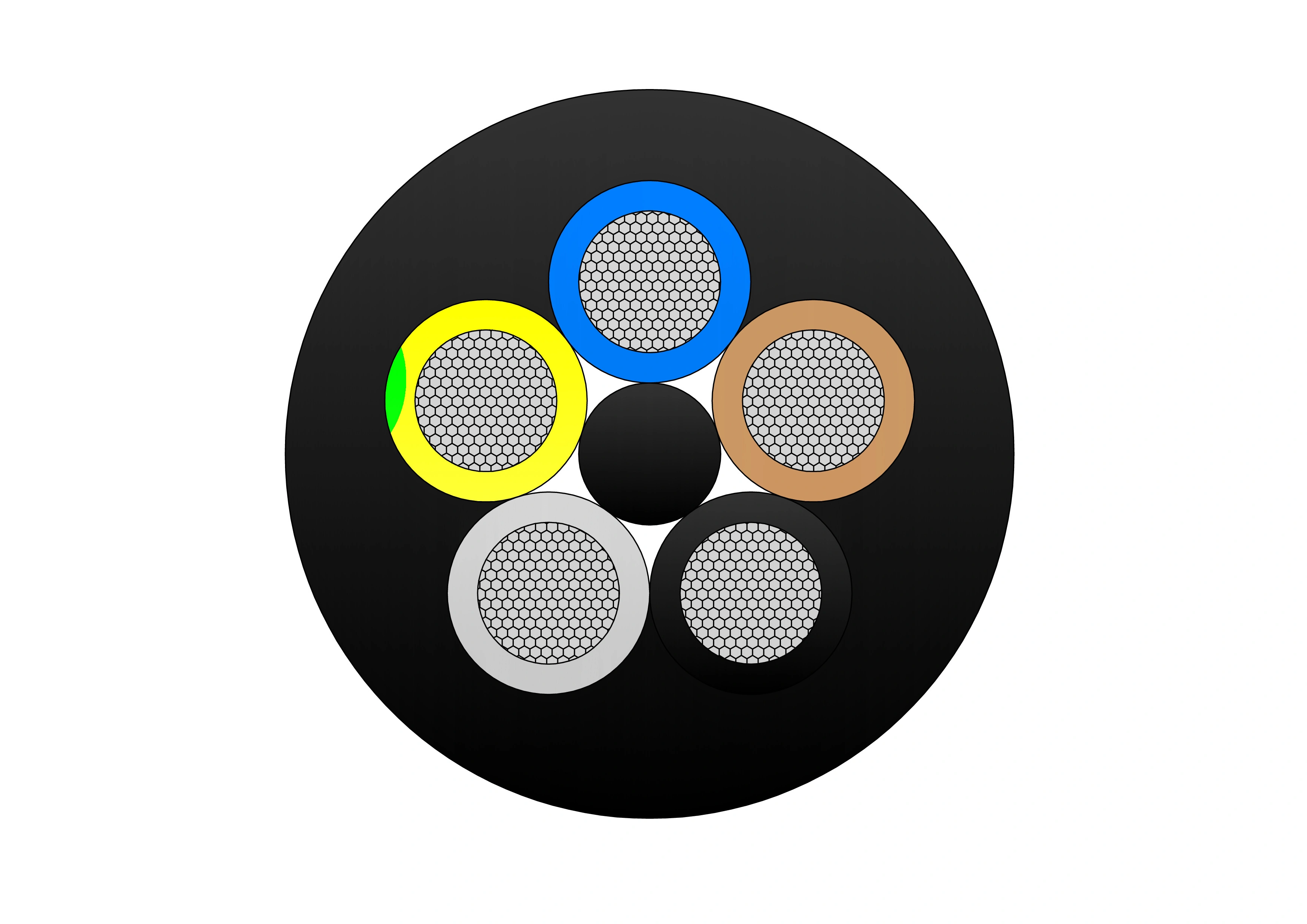
Type 409 Flexible Copper Screened Mining Cable With Central Pilot
The Type 409 Flexible Copper Screened Mining Cable with Central Pilot is a heavy-duty flexible cable engineered for reliable and safe underground mining operations. It features finely stranded tinned copper conductors (class 5) for excellent flexibility and corrosion resistance, EPR (ethylene propylene rubber) insulation for superior dielectric strength and 90°C continuous thermal rating, an overall tinned copper braid screen providing effective EMI protection and grounding, a central pilot core for earth continuity monitoring, safety interlocks, and fault detection, and an extra-heavy-duty flame-retardant rubber outer sheath resistant to oil, abrasion, tearing, crushing, impact, and chemicals. Compliant with AS/NZS 2802 and mining safety standards, it supports high tensile loads, frequent reeling/drag, tight bending radii, and reliable performance in wet, dusty, and hazardous mine conditions. The Type 409 is ideal for power supply to continuous miners, shuttle cars, longwall equipment, drills, and other mobile machinery in coal and metalliferous mines, ensuring enhanced safety through pilot core monitoring and maximum durability.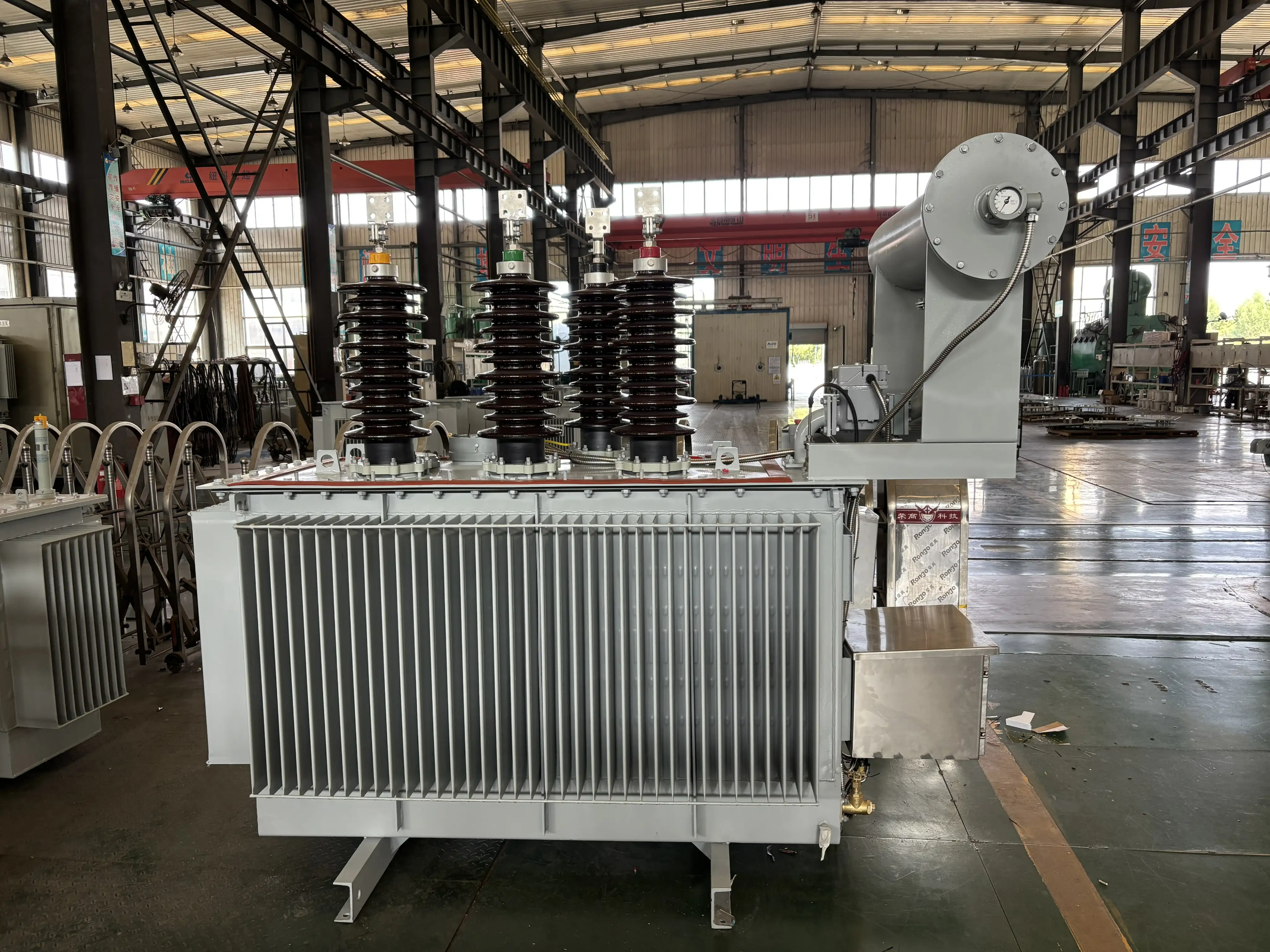
Zigzag Neutral Grounding Transformer to IEC Standards – Factory Direct Sales
Zigzag Neutral Grounding Transformer manufactured to IEC standards is a reliable solution for establishing an artificial neutral point in medium-voltage power systems. Designed with a precision zigzag winding configuration, it provides low zero-sequence impedance during ground faults while maintaining balanced operation under normal conditions. This enables effective limitation of earth fault currents, improved system protection coordination, and enhanced grid safety. Produced under strict IEC compliance, the transformer features a robust core design, high-quality conductors, and reinforced insulation systems to ensure long-term stability and fault withstand capability. Factory direct sales allow for flexible engineering support, competitive pricing, and shorter delivery cycles.
70kV 8000kVA Copper-Wound Oil-Immersed Power Transformer for High-Voltage Distribution
The 70kV 8000kVA Copper-Wound Oil-Immersed Power Transformer for High-Voltage Distribution is designed to deliver robust performance in demanding grid environments. Featuring 100% oxygen-free copper windings, the transformer ensures superior electrical conductivity, reduced losses, and enhanced overload capability. Its oil-immersed cooling system provides excellent heat dissipation, maintaining long-term stability under high-load and continuous operation conditions. The high-grade silicon steel core minimizes noise and magnetic losses, improving overall efficiency. The transformer’s reinforced tank, durable insulation system, and outdoor-ready structure enable reliable operation in harsh climates, industrial zones, and high-temperature regions. Compliant with IEC, IEEE, and GB standards, this transformer supports utility substations, industrial power networks, renewable energy integration, and high-voltage distribution systems, ensuring safe, efficient, and uninterrupted power delivery.Welcome your inquiry
Honesty, Integrity, Frugality, Activeness and Passion