
Wind Power and Energy Storage: Exploring Their Synergy in Renewable Energy Systems
2025-12-19
1. The Importance of Wind Power and Energy Storage
As the world strives to reduce carbon emissions and address climate change, wind energy has emerged as one of the most promising clean and renewable energy sources. Utilizing wind power from nature, wind energy not only provides strong support for the green transformation of the energy structure but also contributes to global efforts to reduce greenhouse gas emissions. Through modern technologies, wind power has become an important alternative to fossil fuels, particularly excelling in reducing carbon footprint. The main advantages of wind energy are its zero emissions, low environmental impact, and virtually unlimited resources. However, the volatility of wind energy is also a significant challenge. Wind speed is greatly affected by weather changes, and the output of wind power generation cannot remain consistently stable, leading to the unpredictability of wind energy. This volatility results in relatively low utilization efficiency and stability of wind energy, necessitating integration with other energy forms such as energy storage systems or smart grids, to ensure the continuity and reliability of energy supply.
This is where energy storage systems come into play. By storing excess energy generated during periods of high wind activity, these systems ensure that the power can be released when wind speeds are low, maintaining a stable energy supply. The integration of wind power and renewable energy storage is essential to overcoming the challenges posed by variable renewable energy sources and ensuring the reliability and efficiency of the power grid.
2. The Synergy Between Wind Power and Energy Storage
The combination of wind power generation and energy storage systems is a game-changer for renewable energy projects, particularly for large-scale wind farms. These systems work together to optimize energy production and distribution. Here's how:
a. Storing Excess Energy for Later Use
During times when wind speeds are high, wind power plants can produce more electricity than is needed for immediate use. Instead of wasting this excess energy, energy storage systems—such as lithium-ion batteries or compressed air energy storage (CAES)—can store it for later use when wind conditions are less favorable.
b. Smoothing Out the Variability
One of the main challenges of wind power is its variability. Since wind speeds fluctuate, energy production can be inconsistent. Energy storage smooths out these fluctuations by providing backup power during low wind periods, ensuring a continuous supply of energy for homes, businesses, and industries.
c. Enhancing Grid Stability
By integrating energy storage systems with wind power generation, the overall stability and reliability of the grid are improved. Storage systems help to balance supply and demand, reducing the need for fossil fuel-based peaking plants, which are often used to compensate for energy shortages.
3. Applications of Wind Power and Energy Storage Systems
The combination of wind energy and energy storage can be applied in various settings, ranging from residential solar installations to large-scale wind farms. Here are some of the primary applications:
a. Utility-Scale Wind Farms
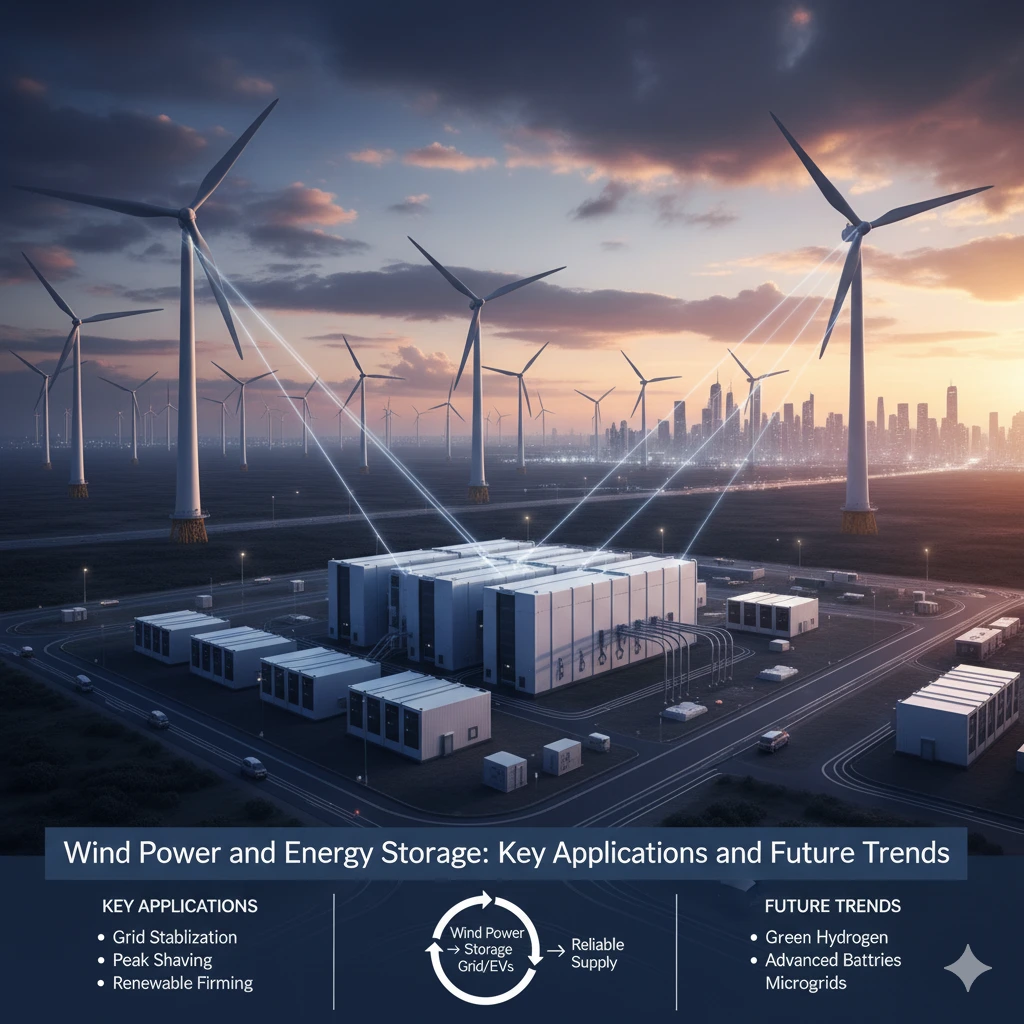
At the large scale, wind farms integrated with energy storage systems are capable of providing reliable, 24/7 power to the grid. By storing energy during high wind periods and releasing it during peak demand times, these systems ensure a constant flow of electricity, making wind power a more reliable source of energy.
b. Offshore Wind Power
Offshore wind power has the potential to generate massive amounts of energy, but its variability can create challenges. Offshore energy storage systems help store power generated by offshore wind turbines, improving energy stability and enabling remote locations to harness the full potential of wind power.
c. Residential and Commercial Systems
For smaller-scale applications, such as residential solar and wind power systems, energy storage offers homeowners and businesses the ability to store wind power for use during periods of low wind activity. This increases energy independence and reduces reliance on the grid.
d. Remote and Isolated Communities
In remote areas, wind energy combined with energy storage can be a cost-effective solution for off-grid communities. These systems allow such areas to generate and store their own energy, reducing the need for expensive and polluting diesel generators.
4. Advancements in Wind Power and Energy Storage Technology
As both wind power generation and energy storage technologies evolve, new advancements are making them more efficient and cost-effective. Key innovations include:
a. Improved Battery Storage
Recent advancements in battery storage technologies have made energy storage systems more affordable and efficient. Lithium-ion batteries, commonly used in electric vehicles, are becoming more widely used in wind power applications, offering improved efficiency, storage capacity, and cost-effectiveness.
b. Enhanced Wind Turbine Efficiency
The efficiency of wind turbines continues to improve, with new designs that can generate power in lower wind speeds. These advancements, combined with enhanced energy storage systems, allow wind energy to be harnessed more effectively, even in areas where wind conditions are less predictable.
c. Long-Duration Energy Storage
One of the challenges of traditional energy storage systems is their limited ability to store energy over long periods. New innovations in long-duration energy storage, such as flow batteries, promise to overcome this challenge, enabling the storage of wind power for days or even weeks.
5. The Future of Wind Power and Energy Storage in the Global Energy Transition
The synergy between wind power and energy storage is a critical part of the global transition to renewable energy. As the demand for clean energy grows, wind power generation and energy storage will play a central role in meeting global energy needs while reducing reliance on fossil fuels.
a. Growing Demand for Renewable Energy
As governments and industries around the world focus on reducing carbon emissions, the demand for renewable energy sources such as wind power and energy storage systems will continue to grow. Wind power is expected to contribute a significant share of global electricity generation in the coming decades.
b. Energy Management Solutions
The integration of wind energy and energy storage systems with smart grid technologies will lead to more efficient energy management. Smart grids will enable real-time monitoring of wind energy production, energy storage, and consumption, optimizing the distribution of power and enhancing grid reliability.
The integration of wind power and energy storage systems is essential for achieving a reliable, clean, and sustainable energy future. By combining wind power generation with advanced storage technologies, we can overcome the challenges posed by variable renewable energy and create a more resilient and efficient global energy system. With continued advancements in energy storage and wind power technology, the future of renewable energy looks brighter than ever.

Related Articles

Related Products
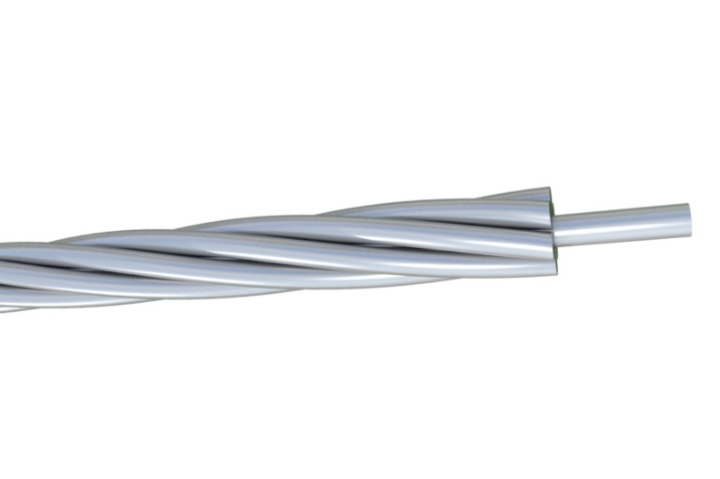
High Quality 16 Gauge Galvanized Steel Conductor Wire Supplier
The 16 Gauge Galvanized Steel Conductor Wire is a versatile and durable solution for electrical and construction applications. Made from premium steel and coated with a high-quality zinc layer through hot-dip galvanization, it provides superior resistance to corrosion and environmental wear. This wire is engineered to deliver consistent tensile strength while maintaining flexibility, making it suitable for grounding systems, fencing, and binding applications. The 16-gauge size ensures easy handling and adaptability for various installation requirements. Its uniform zinc coating enhances longevity and reduces maintenance costs, especially in outdoor environments exposed to moisture and chemicals. Manufactured under strict quality control systems, the wire meets international standards for performance and reliability. With customizable specifications such as coating thickness and tensile strength, the 16 Gauge Galvanized Steel Conductor Wire is widely trusted by contractors and industrial users for its durability and cost-effectiveness.
Three Phase Cast Resin Dry Type Transformer
The Three Phase Cast Resin Dry Type Transformer is a safe, high-efficiency indoor power transformer series designed for reliable medium-voltage to low-voltage step-down in commercial, institutional, industrial, data center, hospital, school, high-rise, and renewable energy applications. With advanced epoxy cast-resin encapsulation and full high-conductivity copper windings, it completely eliminates oil fire risks, environmental hazards, and routine maintenance while offering excellent dielectric strength, thermal performance, resistance to moisture/dust/chemicals, and very low noise levels — making it the ideal choice for fire-sensitive, noise-restricted, space-constrained, or high-reliability indoor installations. Fully compliant with IEC 60076-11, IEC 60076-1/2/3/5/20, EN 50588-1 (eco-design), IEEE C57.12.01, IEEE C57.12.91, UL 1561 (optional listing), and DOE 2016 efficiency standards.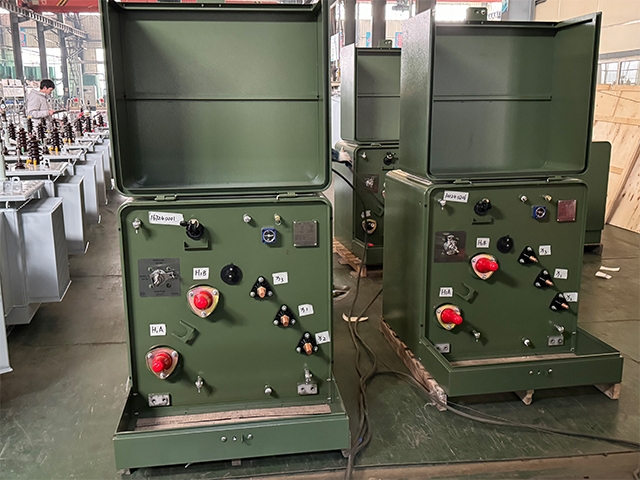
1250kVA Single Phase Pad Mounted Transformer
The 1250kVA Single Phase Pad Mounted Transformer is a premium solution crafted for expansive underground electrical systems in high-growth areas. Housed in a secure, weatherproof cabinet with advanced dead-front or live-front configurations, it maximizes personnel safety and deters tampering in public spaces. Adhering to ANSI C57.12.25, IEEE C57.12.91, and energy efficiency mandates, this 1250kVA single-phase padmount excels in transforming primary voltages up to 34.5kV to flexible secondary levels, offering exceptional short-circuit strength and quiet operation for large-scale residential and commercial deployments.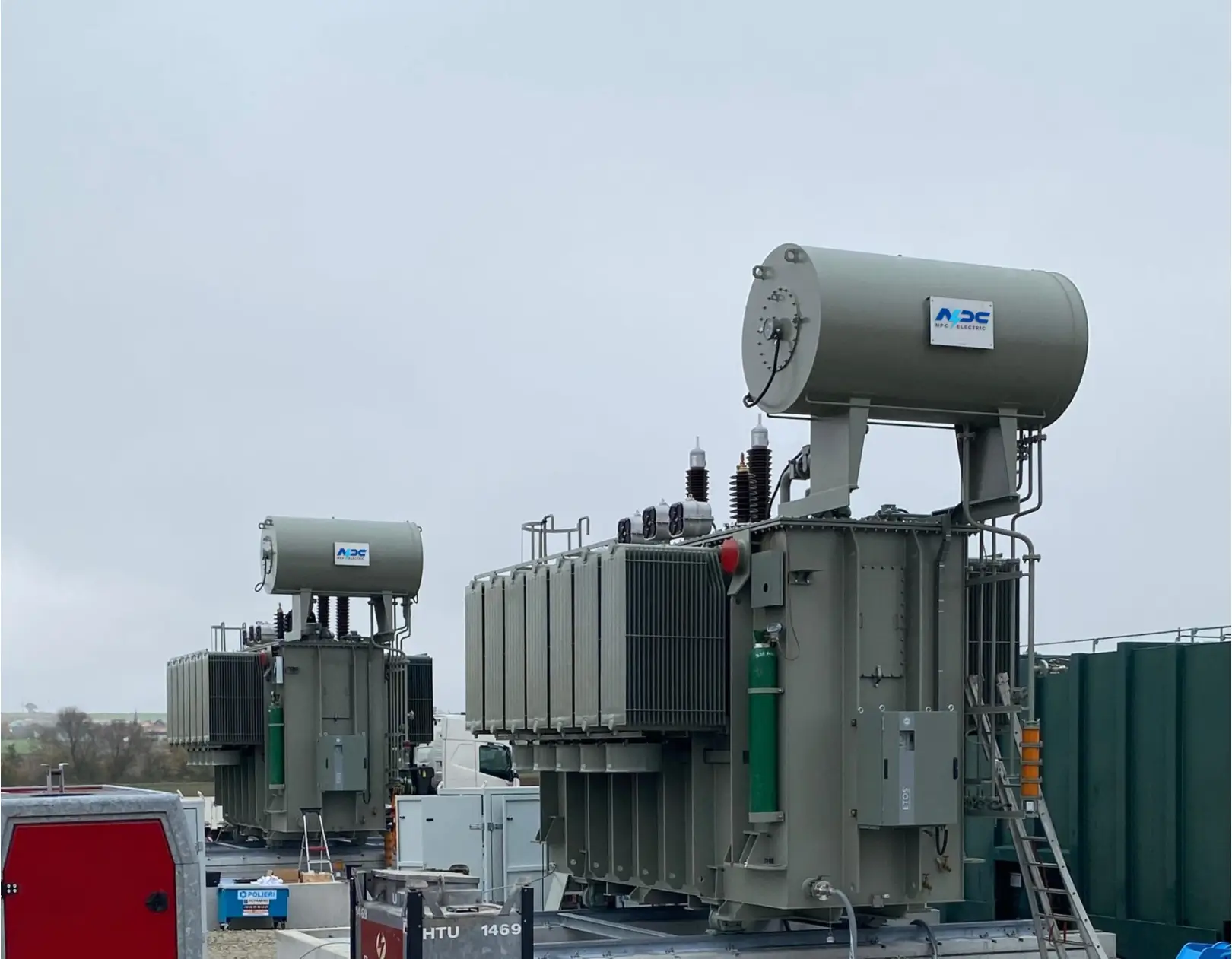
138kV / 140kV / 150kV Three-Phase Oil-Immersed Power Transformer
The 138kV / 140kV / 150kV Three-Phase Oil-Immersed Power Transformer is designed to serve high-voltage transmission and substation applications requiring dependable energy transfer and long-term operational stability. Its design emphasizes electrical reliability, structural strength, and efficient thermal management to support continuous service under varying grid loads. The transformer employs a refined magnetic circuit and carefully engineered winding structure to maintain voltage accuracy while minimizing operational stress. An oil-immersed insulation and cooling system ensures effective heat dissipation and insulation integrity throughout extended operating cycles. Built for outdoor installation, the transformer is capable of withstanding environmental exposure, electrical fluctuations, and mechanical demands associated with modern high-voltage networks. It is suitable for utility-scale projects where safety, efficiency, and durability are essential performance criteria.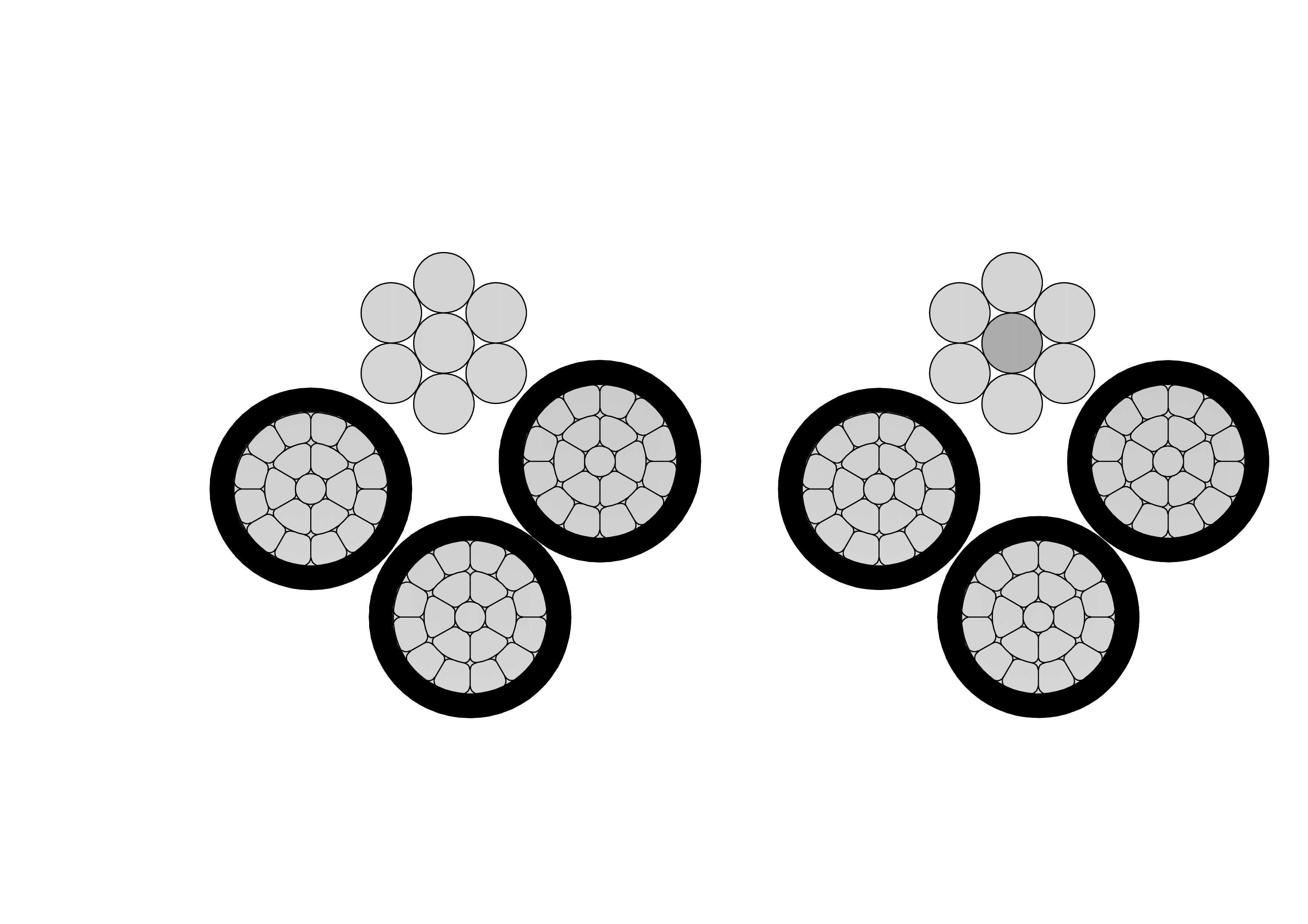
Quadruplex Service Drop Cable
NPC Electric Quadruplex Service Drop Cable offers efficient overhead three-phase service with neutral support. Comprising three-phase conductors (aluminum) insulated with XLPE or PE and helically twisted around a strong neutral messenger (ACSR, AAC, or covered aluminum), it meets ASTM, ICEA, and international standards. The messenger provides full self-support, allowing longer spans and reduced infrastructure costs. Premium insulation resists sunlight, moisture, and mechanical abrasion for decades of outdoor service. Lightweight and flexible, it simplifies installation with low sag. The Quadruplex Service Drop Cable ensures minimal losses, high mechanical endurance, and excellent weather performance up to 600V. Flame-retardant options enhance safety. Perfect for reliable power delivery in urban developments, commercial areas, street lighting, and temporary sites requiring safe, cost-effective aerial bundled solutions.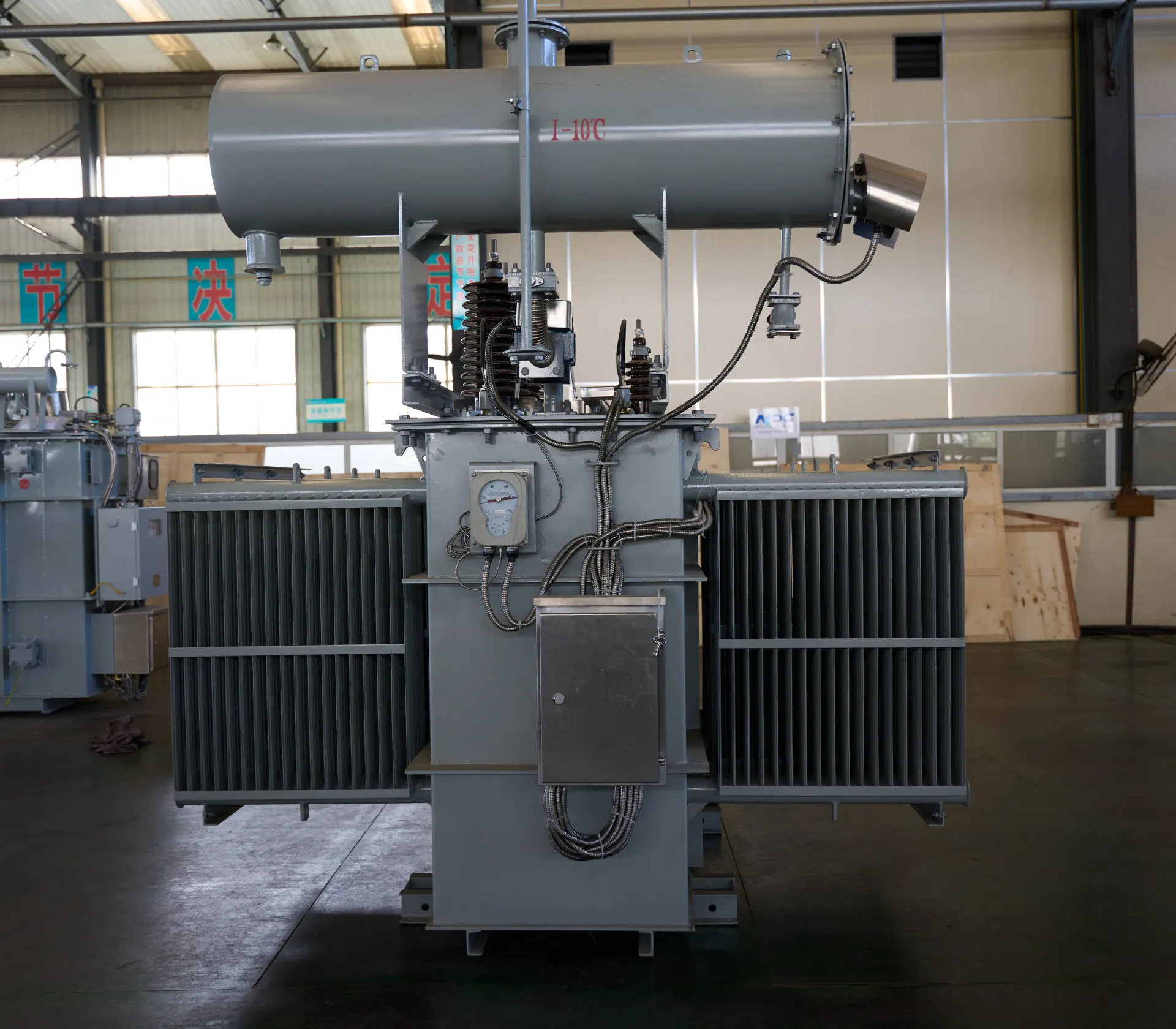
11/0.4kV 630kVA Oil-Immersed Power Transformer Distribution Type
Discover our premium 11/0.4kV 630kVA Oil-Immersed Power Transformer, engineered for superior high-efficiency distribution in modern electrical grids. This robust transformer features advanced silicon steel cores that minimize energy losses, ensuring up to 98% efficiency under full load. Ideal for urban and rural power networks, it incorporates eco-friendly insulating oil with high dielectric strength, providing reliable voltage step-down from 11kV to 0.4kV while handling demanding loads up to 630kVA. Built with corrosion-resistant tanks and precision-wound copper coils, this distribution transformer guarantees long-term durability, reduced maintenance, and compliance with international standards like IEC 60076. Whether for residential complexes, commercial facilities, or industrial applications, it optimizes power delivery, lowers operational costs, and supports sustainable energy practices. Experience unmatched performance with this high-efficiency oil-immersed transformer designed for seamless integration into your power system.
N2XSEY Medium Voltage Power Cable(6/10kV, 8.7/15KV,12/20kV, 18/30kV)
N2XSEY are medium voltage power cables with copper conductors, XLPE insulation, and PVC outer sheath, designed in accordance with VDE 0276-620 standards. Built with copper conductors, thermosetting XLPE insulation, individual metallic screens (copper tape/wire) per core, filler, and tough PVC outer sheath, it meets IEC 60502-2 requirements. Per-core screening minimizes interference and provides fault protection. Low tan delta, high breakdown strength, and excellent thermal endurance ensure efficient operation with reduced losses. PVC sheath delivers good mechanical and moisture protection for fixed installations. Optional longitudinal water-blocking enhances performance in wet conditions. Flame-retardant and durable, the N2XSEY Medium Voltage Power Cable is favored for power grids, industrial sites, renewable installations, and urban infrastructure demanding reliable three-core medium voltage cabling with superior shielding and long-term stability in buried or ducted systems.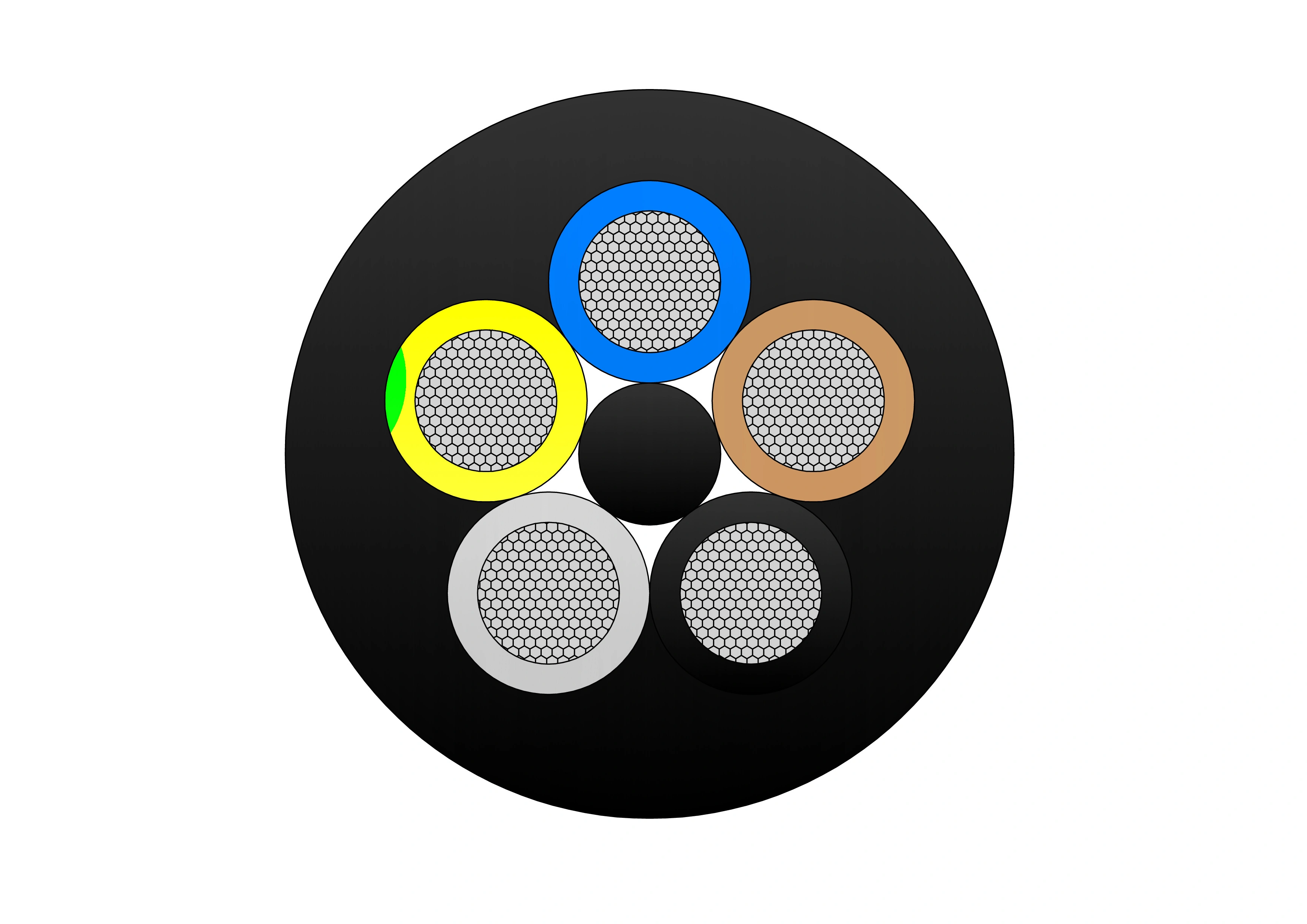
YSLTOE-J 300/500V Cable
The YSLTOE-J 300/500V Cable is a flexible low-voltage control cable featuring tinned copper conductors and a halogen-free, oil-resistant PUR outer sheath. It is engineered for gravity-feed collector baskets in modern high-speed container cranes, ensuring reliable performance under moderate mechanical stress and in oily industrial environments. Manufactured to DIN VDE 0281 and related standards, it offers excellent tensile strength, abrasion resistance, and flexibility. For proper installation, the cable must be mounted torsion-free in a counter-clockwise direction, with a basket diameter exceeding 30× the cable’s outer diameter to prevent damage.
250MVA 330kV High-Voltage Oil-Immersed Distribution Transformer for Grid & Substation
The 250MVA 330kV High-Voltage Oil-Immersed Distribution Transformer is engineered for reliable and efficient power transmission in large utility grids and high-demand substations. Designed with advanced insulation and a durable oil-immersed cooling system, it ensures excellent thermal stability and long service life. The high-voltage 330kV configuration provides exceptional performance in long-distance power delivery, minimizing losses and improving grid stability. Its precision-wound copper coils, high-strength core materials, and robust tank structure guarantee safe operation under fluctuating load conditions. With strong short-circuit resistance, high dielectric strength, and low noise operation, this transformer meets stringent international standards. It is widely used in national grid projects, power plants, and heavy-industry energy networks, supporting continuous, stable, and efficient power distribution.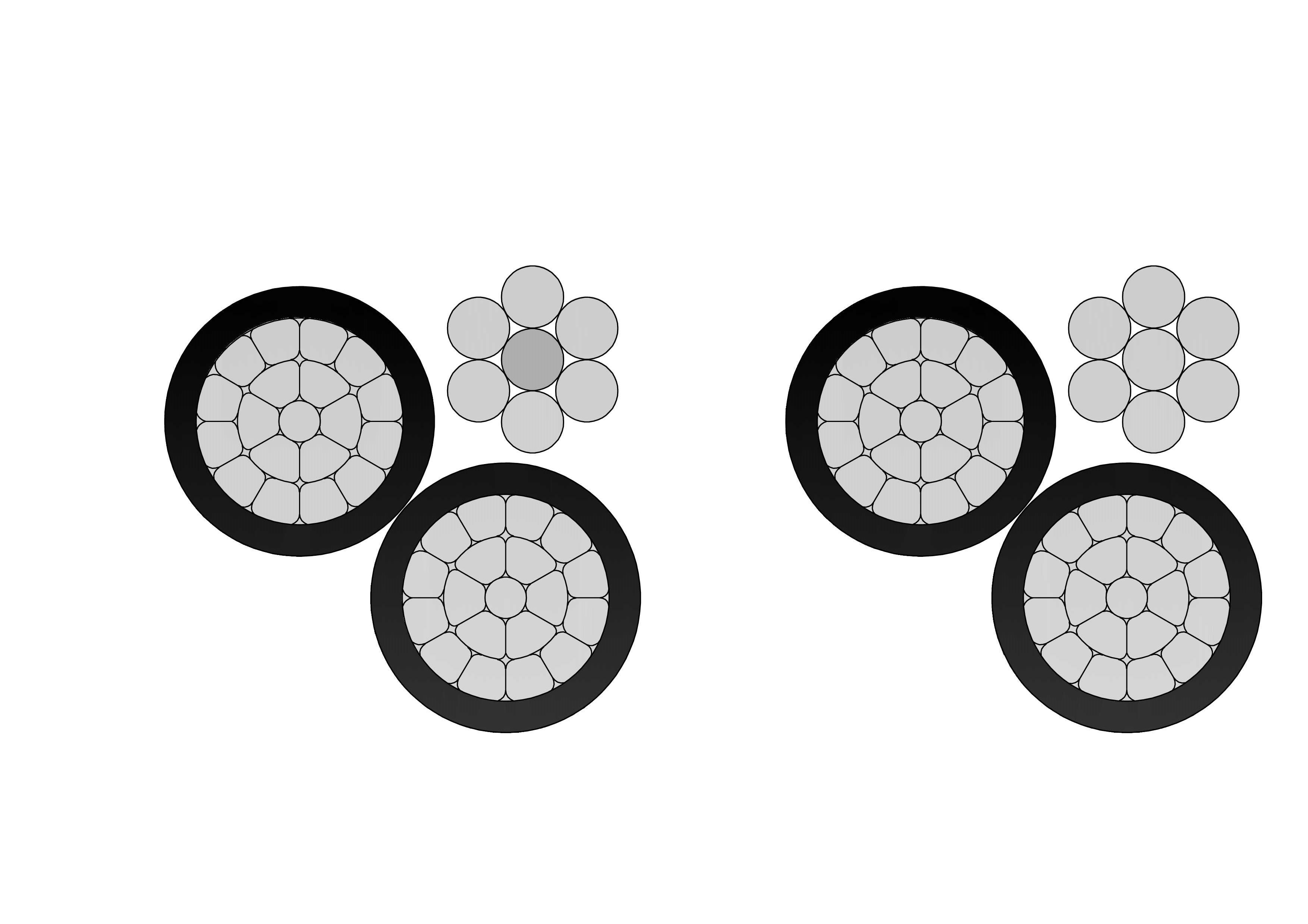
2 Shrimp Aluminum Conductor Triplex Overhead Service Drop Cable
2-2-2 Shrimp Aluminum Conductor Triplex Overhead Service Drop Cable delivers superior overhead power transmission for utility-to-consumer connections. Built with concentric or compressed 1350-H19 aluminum phase conductors (#2 AWG), black XLPE insulation offering enhanced thermal, abrasion, and environmental protection, plus a bare neutral messenger (#2 AWG ACSR/AAAC 6201), it ensures efficient conductivity, corrosion resistance, and structural strength. Rated 600V phase-to-phase up to 90°C (XLPE), with ≈150A ampacity, it complies with ASTM B-230/B-231/B-232/B-399 and ICEA S-76-474. Its balanced, lightweight construction simplifies installation while providing robust long-term performance against harsh outdoor factors like moisture, UV exposure, and mechanical stress.
Type 275 Flexible Overall Semi-conductive Rubber Screened Mining Cable
The Type 275 Flexible Overall Semi-conductive Rubber Screened Mining Cable is a 1.1kV, medium-voltage cable designed for coal mining and heavy-duty industrial applications. It features tinned annealed copper conductors, EPR insulation, and a semi-conductive thermosetting compound screen for enhanced electrical performance. The cable is reinforced with polyamide yarn braid and protected by a heavy-duty CSP sheath, offering oil resistance, flame retardancy, and mechanical durability. Its robust construction ensures reliable power delivery to shuttle cars, electric pumps, and other mining equipment. Compliant with AS/NZS 2802 and stringent mining standards, it supports very high tensile loads, frequent flexing, tight bending radii, and reliable operation in wet, dusty, and hazardous mine environments.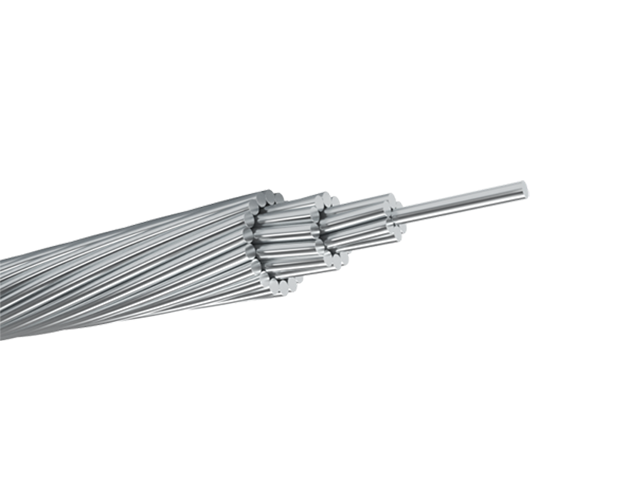
CANTON AAAC Conductor Cable
CANTON AAAC (All Aluminum Alloy Conductor) cables are manufactured in accordance with ASTM B399 standards, offering high tensile strength, good electrical conductivity, and corrosion resistance. With 800 mm² nominal area and 61-strand design, it uses heat-treated aluminum-magnesium-silicon alloy (6201-T81) for enhanced strength (295 MPa min) and conductivity (53% IACS min). Meeting ASTM B398, B399, IEC 61089, and BS EN 50182 standards, this cable handles ampacity up to 1200A at 75°C and voltages up to 33kV. The all-alloy construction avoids bimetallic corrosion, providing better resistance in harsh conditions than ACSR. Reduced weight minimizes sag and installation expenses, supporting longer spans. The Canton AAAC Conductor Cable delivers low electrical losses, high mechanical endurance, and excellent weather tolerance. Flame-retardant variants available. Perfect for urban grids, renewable projects, and coastal setups, it provides cost-effective, low-maintenance power delivery in overhead applications globally, excelling in reliability and lifespan over conventional conductors.
10 Gauge Galvanized Steel Conductor Wire
The 10 Gauge Galvanized Steel Conductor Wire is a premium high-strength bare steel wire designed for reliable overhead power line applications. Manufactured with heavy hot-dip zinc coating, this 10 AWG galvanized conductor delivers superior corrosion resistance and long service life in harsh outdoor environments. It offers excellent tensile strength and mechanical performance, making it ideal for use as overhead ground wire (static wire), guy wire, or messenger wire. Fully compliant with ASTM A475 and related utility standards, the 10 Gauge Galvanized Steel Conductor Wire undergoes rigorous testing from raw materials to finished product to ensure uniform zinc adhesion, consistent diameter, and high breaking strength. Its durable construction minimizes maintenance while providing dependable shielding and structural support for transmission and distribution systems.SHTOU-mining-cable-2.webp)
(N)SHTOU-O/J PUR 0.6/1kV Cable
(N)SHTOU-O/J PUR 0.6/1kV cable is a flexible, rubber-insulated low voltage power and control cable manufactured according to VDE 0250 standards. Designed for harbour cranes, conveyors, mining equipment, and other heavy-duty mobile machinery, it offers exceptional mechanical strength, oil resistance, flame retardancy, and flexibility under high dynamic loads. Its halogen-free polyurethane (PUR) sheath ensures outstanding abrasion resistance, long service life, and reliable performance in demanding indoor and outdoor environments. Capable of withstanding torsional stress, high tensile loads, and fast operating speeds, this cable is ideal for applications requiring durability and operational safety.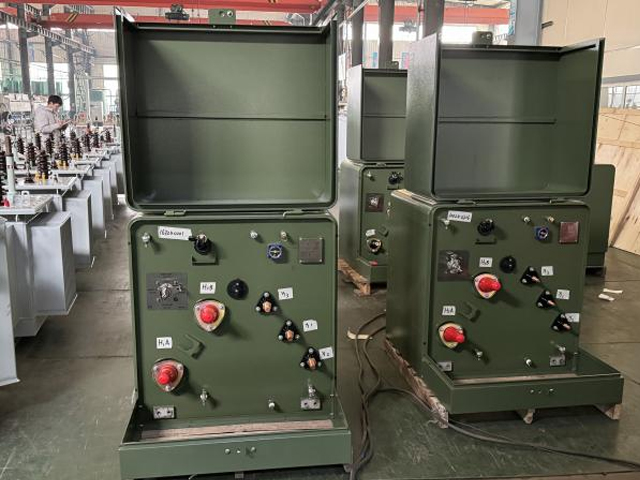
100kVA Conventional Type Single Phase Pole Mounted Transformer
NPC ELECTRIC has been specialized in manufacturing 100kVA Single Phase pole Mounted transformer for more than 20 years, which complies with international standards such as ANSI/IEEE C57, IEC60076 and other standards. Its main function is to convert high voltage electricity (such as 11kV, 13.8kV, etc.) into low voltage electricity (such as 120V/240V), providing stable and reliable power supply to end users. It is suitable for residential, commercial, agricultural and small industrial loads. Standard features include mineral oil insulation (ONAN cooling), aluminum or copper windings, primary voltages 2.4kV–34.5kV grounded wye or delta (common: 7200/12470GrdY, 7620/13200GrdY, 12470GrdY/7200, 24940GrdY/14400, 34500GrdY/19920), secondary 120/240V or 240/120V split-phase (options for 277V or custom), BIL ratings 95–150kV HV / 30kV LV, impedance typically 2.0–4.5%, ±2×2.5% or 5-position tap changer, conventional or CSP (completely self-protected) configurations with internal fuses, lightning arresters, weak-link protection, pressure relief valve, oil sight gauge, and ANSI 70 gray tank finish. Efficiency typically reaches 99.25–99.29% at 50% load per DOE levels (with 2029 amendments targeting further reductions in losses for units >100 kVA), with low sound levels and corrosion-resistant hardware for extended outdoor service.Welcome your inquiry
Honesty, Integrity, Frugality, Activeness and Passion